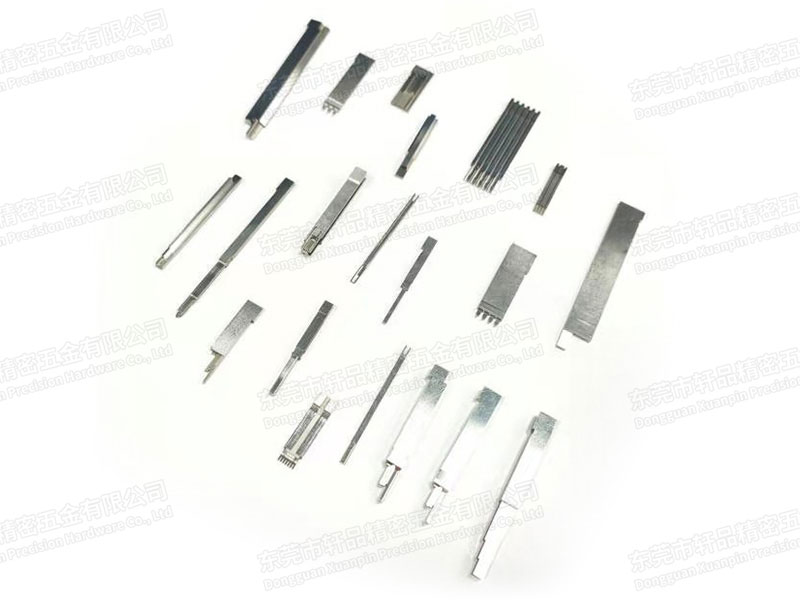
LED lighting has become the standard for energy-efficient illumination, but the performance and lifespan of LED products depend heavily on effective thermal management. At the heart of this process lies the Precision Plastic LED Heatsink Bracket Mold — a specialized tool that produces the critical heat-dissipating components essential for LED longevity. This article examines what makes these molds different from standard injection molds, the extreme precision and durability requirements involved, and why XP Mold has emerged as a leader in this specialized field, with multi-cavity capabilities reaching up to 5,760 cavities.
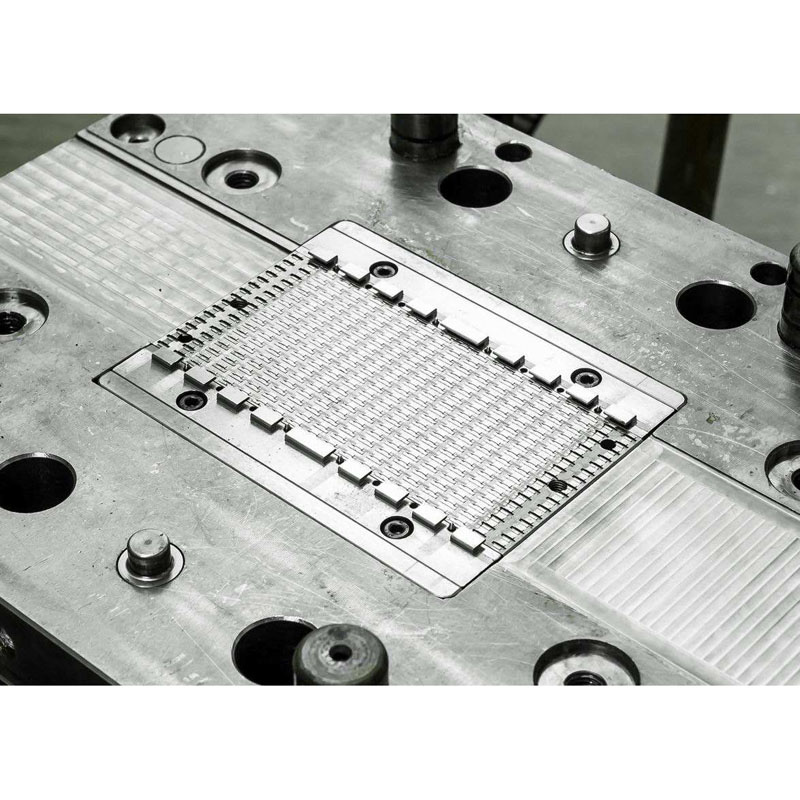
LED technology has revolutionized lighting, offering energy efficiency, longevity, and design flexibility. However, the performance and lifespan of LEDs are directly tied to their ability to dissipate heat. Without effective thermal management, LEDs can experience reduced light output, color shift, and premature failure. The heat dissipation bracket — the component that supports and secures the LED while channeling heat away from the chip — is therefore a critical part of any LED lighting system.
The Precision Plastic LED Heatsink Bracket Mold is a specialized injection mold designed to produce these essential components. Through the injection molding process, molten plastic material is injected into the mold cavity, where it cools and solidifies into the specific shape of the heat dissipation bracket. These brackets are then used to support and secure LED components while effectively dissipating heat, thereby extending the lifespan of LED lighting fixtures.
XP Mold, established in 2013 and located in Dongguan, China's renowned mold manufacturing hub, has built a reputation for excellence in this field. With over a decade of specialized experience, the company focuses on LED lead frame molds, IC packaging molds, optical molds, connector molds, and high-precision mold components. This article explores the key features, manufacturing standards, and advantages of precision LED heatsink bracket molds.
An LED heat dissipation lead frame mold is a type of mold used for producing heat dissipation brackets for LED lighting fixtures. Through the injection molding process, molten plastic material is injected into the mold cavity, where it cools and solidifies into the specific shape of the heat dissipation lead frame.
The LED Heatsink Lead Frame Mold belongs to the category of multi-cavity molds and insert molds. Multi-cavity molds allow multiple parts to be produced in a single injection cycle, dramatically increasing production efficiency. Insert molding, meanwhile, enables the integration of metal or other materials into the plastic component during the molding process, adding strength and functionality.
Below is a summary of the key characteristics and capabilities for the Precision Plastic LED Heatsink Bracket Mold from XP Mold.
| Parameter | Specification Details |
| Product Name | Precision Plastic LED Heatsink Bracket Mold |
| Brand | XP Mold |
| Mold Type | Multi-cavity mold, insert mold |
| Maximum Cavities | Up to 5,760 cavities (industry-leading in China) |
| Common Materials | PPA (Polyphthalamide), LCP (Liquid Crystal Polymer), epoxy resin |
| Equipment Precision | Wire Cutting: 0.001mm, EDM: 0.003mm, CNC: 0.005mm |
| Key Certifications | ISO9001:2015, ISO14001:2015, IATF16949, AS9100D, High-Tech Enterprise |
| Mold Size Range | 150mm × 150mm to 650mm × 600mm |
The production of LED bracket molds requires adherence to stringent standards to ensure the final components meet the demanding requirements of modern lighting applications. As market demands have evolved, the requirements for precision mold components have become increasingly rigorous.
During operation, molds undergo repeated heating and cooling cycles, subjecting the cavity surface to tensile and compressive stresses. This can cause surface cracking and peeling, increasing friction, hindering plastic deformation, reducing dimensional accuracy, and ultimately leading to mold failure. Thermal fatigue is one of the primary failure modes for hot-work molds.
Precision mold components often operate under harsh conditions, with some enduring significant impact loads that may lead to brittle fracture. To prevent sudden breakage during operation, molds must possess high strength and toughness. The toughness primarily depends on the material's carbon content, grain size, and microstructure.
When molds operate at elevated temperatures, hardness and strength decrease, leading to premature wear or plastic deformation failure. Mold materials must demonstrate high tempering stability to ensure sufficient hardness and strength at working temperatures.
Certain molds, such as plastic molds, are exposed to chlorine- and fluorine-containing elements in plastics. When heated, these elements release highly corrosive gases (e.g., HCl, HF), which erode the mold cavity surface, increase roughness, and accelerate wear failure.
During operation, precision mold components are subjected to long-term cyclic stresses, often resulting in fatigue fractures. These fractures may manifest as low-energy multi-impact fatigue, tensile fatigue, contact fatigue, or bending fatigue. Fatigue resistance depends mainly on the material's strength, toughness, hardness, and inclusion content.
To meet these requirements, LED bracket mold processing must adhere to the following standards:
• High Precision – Ensures dimensional accuracy and surface finish for high-quality LED brackets.
• High Durability – Molds must withstand prolonged production runs without significant wear or damage.
• Reliability – Consistent performance to guarantee uninterrupted production.
• Adaptability – Ability to accommodate varying production conditions and material changes.
• Cost-Effectiveness – Reasonable costs to ensure a strong return on investment.
The performance of an LED heatsink bracket mold is heavily influenced by the materials used in its construction. XP Mold utilizes advanced materials specifically selected for their thermal and mechanical properties.
PPA is a high-performance plastic that offers excellent thermal stability, chemical resistance, and dimensional stability. It is commonly used in LED lead frame molds due to its ability to maintain strength and stiffness at elevated temperatures. PPA materials are particularly suitable for SMD (Surface Mount Device) models, where precision and reliability are paramount.
LCP is another high-performance material with outstanding heat resistance, mechanical strength, and flow characteristics. It is often used in applications requiring thin walls, tight tolerances, and high-temperature performance.
For IC packaging molds, epoxy resin is commonly used. This material provides excellent adhesion, mechanical strength, and electrical insulation properties, making it ideal for encapsulating semiconductor components.
The mold base and components are manufactured from specialized alloy steels that provide high thermal fatigue resistance, strength, toughness, and corrosion resistance. These materials are heat-treated to achieve the required hardness and wear resistance.
The Precision Plastic LED Heatsink Bracket Mold is used across a wide range of LED lighting applications:
• LED lighting fixtures – Producing brackets and housings for LED luminaires, including lamp heads, bases, and shells.
• LED display screens – Manufacturing structural components and support elements for LED display modules.
• Automotive lighting – Creating brackets and housings for automotive headlights, taillights, and interior lighting.
• Outdoor signage and billboards – Producing structural components for outdoor LED advertising displays.
• General lighting – Supporting the production of LED components for residential, commercial, and industrial lighting.
XP Mold has positioned itself as a leader in precision LED mold manufacturing through a combination of advanced equipment, technical expertise, and quality certifications.
One of the company's standout capabilities is its proficiency in multi-cavity molds. With some designs supporting over 5,760 cavities, XP Mold is recognized as the industry leader in China for cavity count. This capability dramatically increases production efficiency and reduces per-part costs, making it particularly valuable for high-volume LED manufacturing.
XP Mold operates workshops equipped with high-precision machinery imported from Germany and Japan. The equipment achieves exceptional precision: wire cutting to 0.001mm, EDM to 0.003mm, and CNC machining to 0.005mm. This level of precision ensures that the molds produce components with consistent dimensional accuracy and surface finish.
The company's technical team has over 20 years of experience in the mold industry, particularly in the LED lead frame mold area, where they rank among the top three in China. This deep expertise enables XP Mold to tackle complex challenges and deliver innovative solutions.
XP Mold holds multiple certifications that demonstrate its commitment to quality, including ISO9001:2015, ISO14001:2015, IATF16949, AS9100D, and High-Tech Enterprise certification.
A: XP Mold can produce multi-cavity molds with up to 5,760 cavities, currently the highest in China for this type of mold.
A: Common materials include PPA (Polyphthalamide) and LCP (Liquid Crystal Polymer) for the plastic components, and specialized alloy steels for the mold base and components.
A: The company's equipment achieves wire cutting precision of 0.001mm, EDM precision of 0.003mm, and CNC precision of 0.005mm.
A: XP Mold holds ISO9001:2015, ISO14001:2015, IATF16949, AS9100D, and High-Tech Enterprise certifications.
The Precision Plastic LED Heatsink Bracket Mold is a critical component in the LED manufacturing supply chain. Its ability to produce high-quality, consistent components directly impacts the performance, reliability, and longevity of LED lighting products. XP Mold has established itself as a leader in this specialized field, combining advanced multi-cavity capabilities, exceptional precision, and a deep technical expertise that ranks among the best in China. With certifications across quality, automotive, and aerospace standards, and a team with over two decades of experience, XP Mold offers a reliable solution for LED manufacturers seeking precision, efficiency, and durability. For inquiries, technical specifications, or to discuss your specific mold requirements, please reach out to the our team — we are ready to provide professional guidance and customized solutions for your LED mold needs.