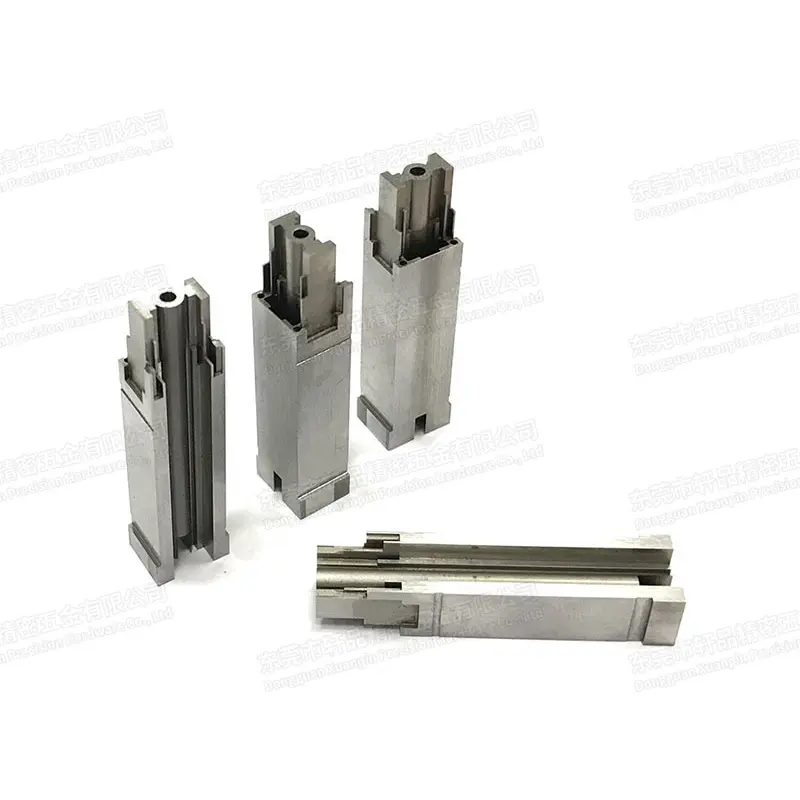
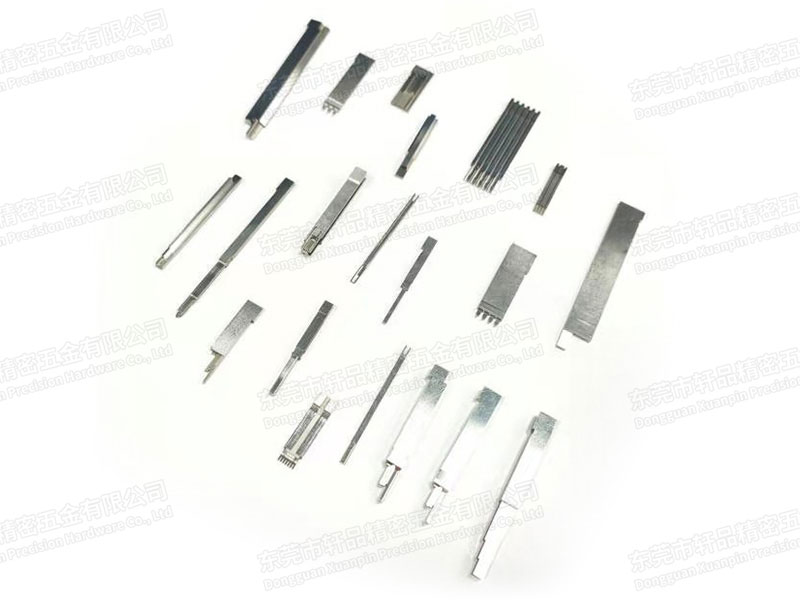
Dongguan Xuan Pin Mould Technology Co., Ltd. develops Precision Plastic LED Mirror Reflector Mould solutions that shape how modern LED lighting achieves uniform brightness and controlled beam performance across industries. These optical components are quietly behind many "perfectly shiny" lighting effects seen today.
In recent years, LED lighting has shifted from simple illumination to highly controlled optical engineering. The clarity, direction, and uniformity of light are no longer determined only by the LED chip itself, but also by how the reflector structure is formed inside a mould cavity.
To the naked eye, LED lighting may look simple: a small light source producing bright output. However, the reality is more complex. Light emitted from a diode is naturally scattered in multiple directions. Without control, this leads to glare, uneven brightness, and energy waste.
Reflector components act like "light directors," reshaping the raw emission into usable beams. The internal surface of a reflector must be extremely smooth and geometrically accurate to guide photons efficiently. Even tiny surface defects can cause visible lighting inconsistencies.
This is why precision tooling plays a critical role. A well-designed optical cavity ensures that each reflector produced behaves consistently, maintaining stable optical output across large production volumes.
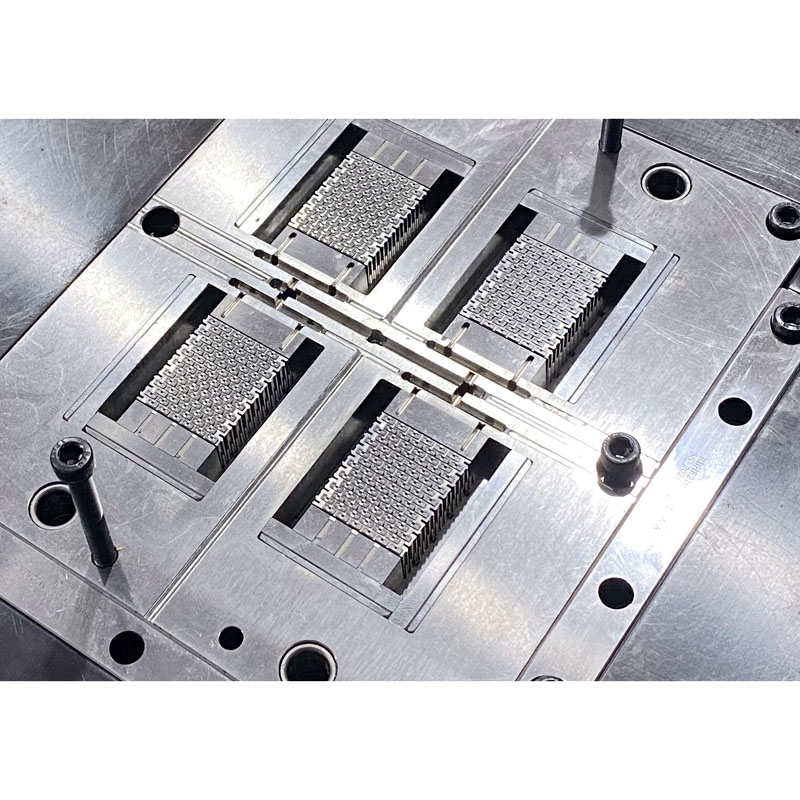
The shape of a reflector determines how light is redirected. Different angles create different beam effects—narrow spotlighting, wide flood distribution, or soft diffusion.
Key geometric factors include:
- Curvature accuracy
- Surface micro-texture
- Cavity symmetry
- Edge sharpness control
Each of these parameters is directly transferred from mould design to final component performance. When geometry is inconsistent, lighting artifacts such as dark spots or hot spots can appear.
A high-performance Precision Plastic LED Mirror Reflector Mould ensures that every cavity maintains identical optical behavior, even in large multi-cavity layouts.
The formation of LED reflectors relies on injection molding, where molten polymer is shaped under controlled pressure and temperature. The challenge is not only shaping plastic, but preserving optical-grade surface quality.
Engineers simulate light paths and reflectivity behavior before physical tooling begins. Optical simulation tools are often used to refine angles and curvature.
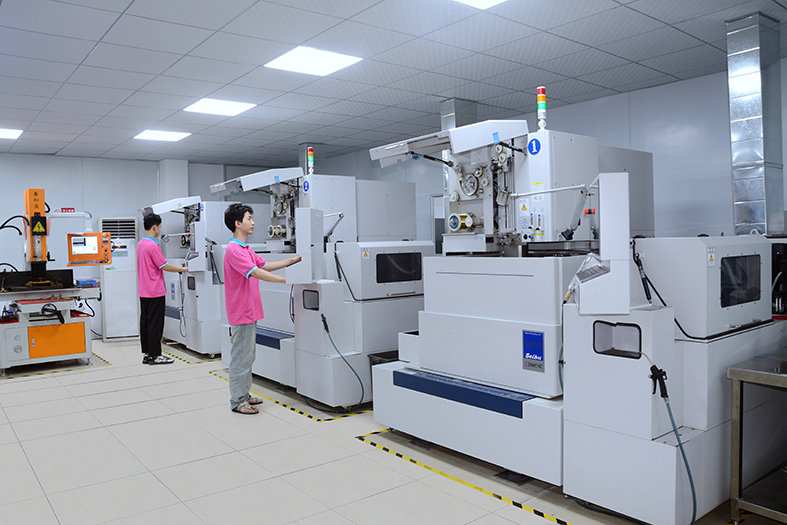
High-precision machining equipment creates micro-level surface accuracy. Any deviation at this stage can influence beam uniformity later.
Molten material fills the cavity rapidly, requiring stable pressure control to avoid shrinkage or deformation.
Controlled cooling ensures dimensional stability, preventing warping that could affect optical alignment.
| Process Stage | Key Focus | Impact on LED Performance | |
| Design | Optical simulation | Beam accuracy | |
| Machining | Surface precision | Reflectivity quality | |
| Injection | Flow stability | Structural consistency | |
| Cooling | Dimensional control | Shape retention |
Each stage contributes to how effectively the final reflector manages light behavior in real applications.
Modern LED lighting demands large-scale consistency, especially for commercial and architectural installations. To meet this, high-cavity mould systems are increasingly used.
Dongguan Xuan Pin Mould Technology Co., Ltd. has developed systems capable of extremely high cavity counts, enabling synchronized production of multiple reflector units within a single cycle. This reduces variation between parts and improves optical uniformity across batches.
The Plastic LED Mirror Reflector Mould designed for high cavity layouts must solve several engineering challenges:
- Maintaining identical flow balance across all cavities
- Preventing pressure drop variations
- Ensuring uniform cooling across extended tool structures
- Controlling micro-deformation in long production cycles
These requirements push mould design beyond conventional structural engineering into the field of precision optical replication.
Producing reflector components is not only about shaping plastic; it is about preserving light behavior at a microscopic level.
Common challenges include:
- Surface micro-defects: Even invisible scratches can scatter light unpredictably
- Thermal distortion: Uneven cooling leads to slight curvature errors
- Material shrinkage: Small dimensional shifts affect beam angles
- Cavity imbalance: Multi-cavity systems may produce inconsistent outputs if flow is uneven
Addressing these challenges requires both design foresight and manufacturing stability. The Precision Plastic LED Mirror Reflector Mould is therefore engineered with strict control over both geometry and process repeatability.
Reflector components produced through high-precision mould systems are widely used in various lighting environments where beam control is critical.
- Commercial lighting systems for focused retail illumination
- Automotive lighting assemblies requiring directional beam safety
- Architectural lighting setups that highlight building contours
- Industrial lighting for large-area visibility enhancement
- Medical lighting instruments where shadow reduction is essential
- Consumer electronics such as compact flashlight optics and projection systems
In each case, the reflector's role is to transform raw LED output into purposeful illumination patterns.
Over time, LED lighting design has evolved from simple reflectors to highly engineered optical systems. This evolution is closely tied to improvements in mould precision, simulation technology, and multi-cavity structuring.
The Plastic LED Mirror Reflector Mould has become a key enabling factor in achieving consistent lighting behavior across complex applications. Instead of relying on post-processing adjustments, modern reflector systems depend on initial mould accuracy to define optical performance from the start.
As LED lighting continues to evolve toward higher efficiency and more refined optical control, the role of precision tooling becomes increasingly important. The development of complex multi-cavity structures and accurate reflector geometries demonstrates how closely lighting performance is tied to mould engineering quality. Dongguan Xuan Pin Mould Technology Co., Ltd. remains closely associated with the advancement of Precision Plastic LED Mirror Reflector Mould technology, contributing to the broader progression of optical component development in modern lighting systems.